Saraan Asim
Saraan Asim
Stage
0→1
Product
On-demand home services marketplace
Dates
2026, live
My part
Led the team. I set up the architecture and the monorepo.
Stack
iOS, Android, Monorepo, AI matching
Live
rushod.com

Rush OnDemand

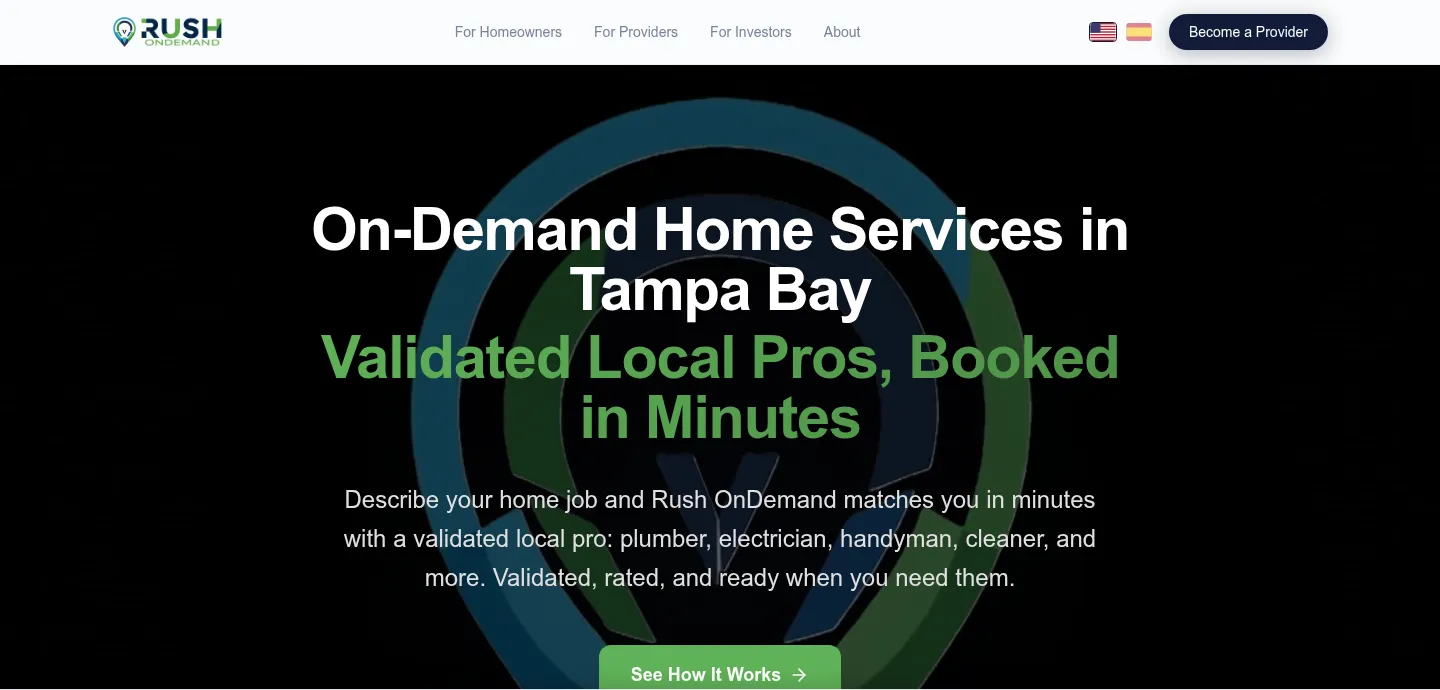
A two-sided marketplace for home services. Homeowners describe a job in plain words and get matched with a validated local pro in minutes, and pros run their work from a separate provider app.

Rush OnDemand's home page with the headline 'Validated Local Pros, Booked in Minutes' and a See How It Works button.
Fig. 1. Rush OnDemand's public home page.

0→1

The product

Finding a plumber or an electrician usually means calling around, guessing at the price and hoping the person who turns up is qualified. Rush OnDemand turns that into one app. A homeowner describes the job in plain words, and the app matches them with a validated local pro: a plumber, an electrician, a handyman, a cleaner and more.

Every pro is checked before they can take work, with their licences and certifications verified. Homeowners see a price range before they book, follow the pro’s arrival in real time, then pay and rate the job in the app. Pros get their own app to take jobs and run their work.

What I built

I led the team that built Rush OnDemand, and I personally set up the architecture and the monorepo: the structure the customer app, the provider app and their shared code live in. The marketplace features on top of it, including matching, payments and reviews, were built by the team.

How it works

There are two apps, each on iOS and Android. The customer app takes a request in plain language and sends it to the marketplace, where AI works out what kind of pro the job needs and finds the best available validated pro nearby. The provider app is where pros receive and accept jobs. Once a job is booked, both sides follow it in the app until it is paid and reviewed.

Some details of how it is built are private to the client, so this page stays at the level the public product shows.
2 decisions

Decisions

  1. One repository for two apps

    The customer app and the provider app are two products on two stores, but they describe the same jobs, bookings and people. I set them up as one monorepo so both apps build from the same shared code, and a change to a booking means the same thing on both sides.

  2. Architecture first, then the team

    I set up the architecture and the repository before the feature work started. The team then built matching, payments and the rest on a structure that was already agreed, so the team spent its time on product features.

Feature level

From the project record

Architecture

Customer appiOS · AndroidProvider appiOS · AndroidShared codeone monorepoMatchingAI · nearby prosBookingstracking · paymentReviewsboth sidesCustomer appiOS · AndroidProvider appiOS · AndroidShared codeone monorepoMatchingAI · nearby prosBookingstracking · paymentReviewsboth sides
Fig. 2. Two apps, one repository, one marketplace in the middle. Shown at product level only.

Result

Outcome

Rush OnDemand is live, with a free customer app on the App Store and Google Play and a separate provider app for pros. Homeowners describe a job, get matched with a validated pro, track the pro's arrival in the app, then pay and leave a review.