Outcome
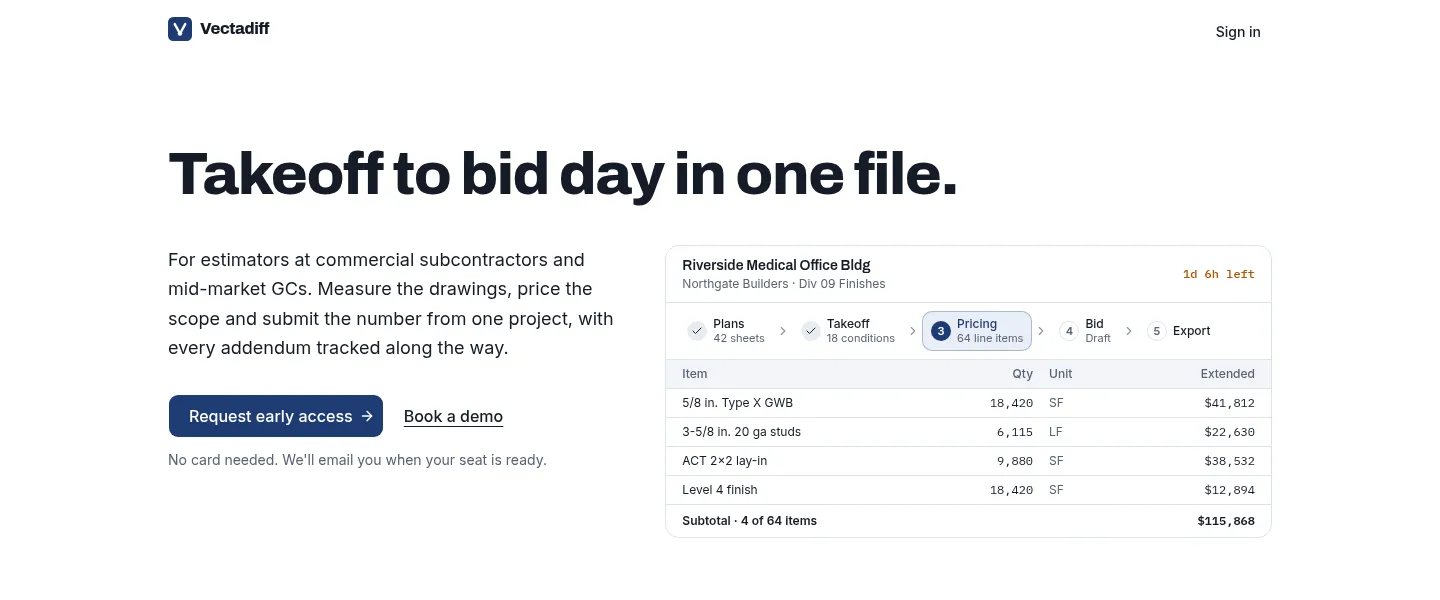
Vectadiff is live at vectadiff.com, in early access. An estimator can take a project from the drawings and specs through takeoff, pricing and addenda review to an exported bid form PDF and schedule of values.
Preconstruction intelligence for commercial subcontractors and mid-market general contractors. Drawings and specs go in, takeoff and pricing happen in one project, addenda are tracked, and a proposal comes out.
0→1
Vectadiff is preconstruction software for estimators at commercial subcontractors and mid-market general contractors. I built it because estimators lose days to manual takeoff. A bid starts with a set of drawings and a book of specifications that have to become quantities and a price, and an addendum issued shortly before the deadline sends the estimator back through the sheets.
In Vectadiff that happens in one project: the estimator measures the drawings, prices the scope, tracks every addendum and submits the number.
Vectadiff is my own product and I am its only author. I started it in October 2026 and built four hard problems into the first version.
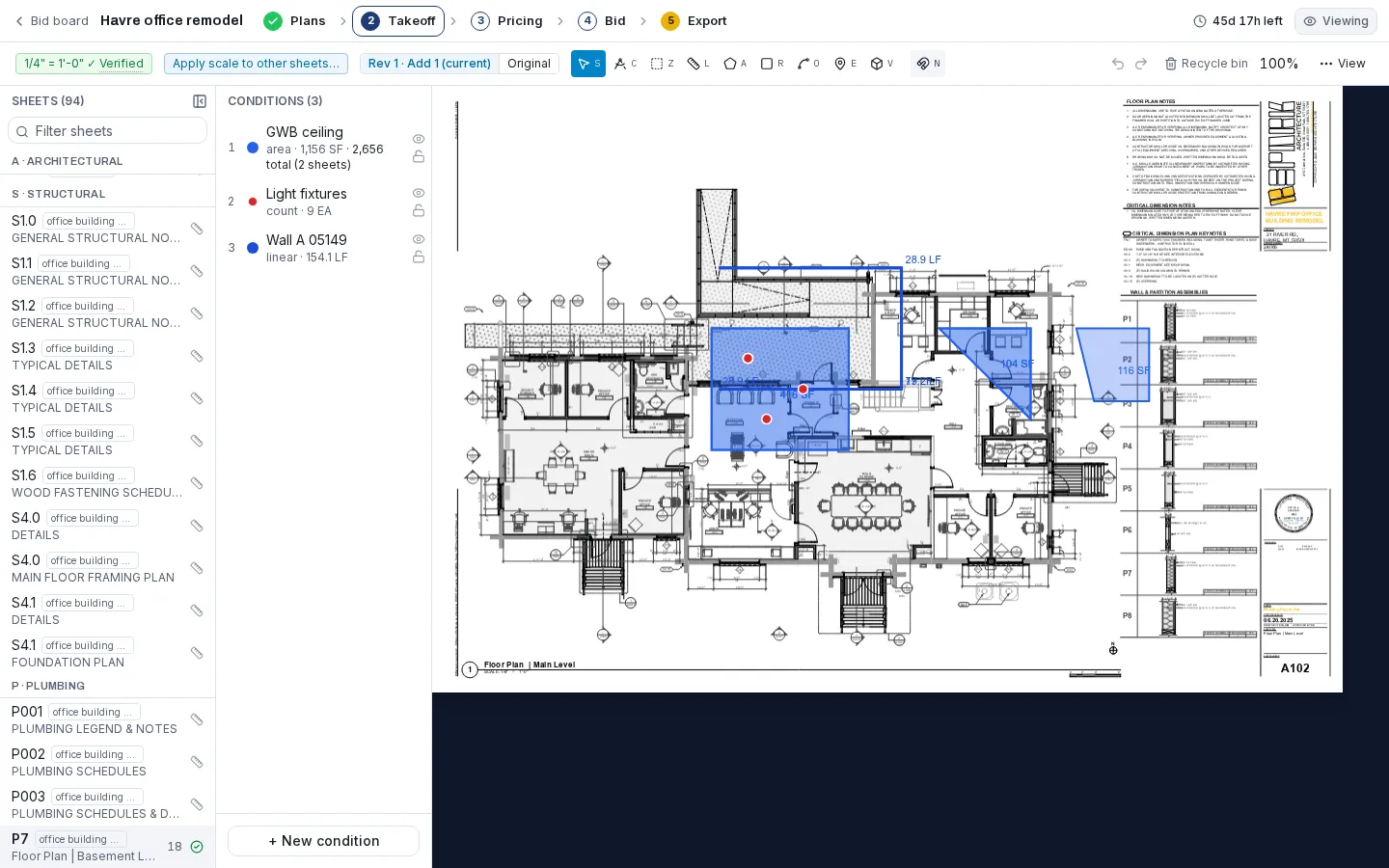
Vector takeoff. The estimator calibrates a sheet with two points and measures lengths, areas, volumes and counts directly on the drawing. One shape expands into its full material list through assemblies, so a wall becomes studs, track, drywall, tape and compound.
Spec parsing. Claude reads the specifications, pulls out the clauses that cost money with a link back to the page and section, and drafts the questions to send to the architect.
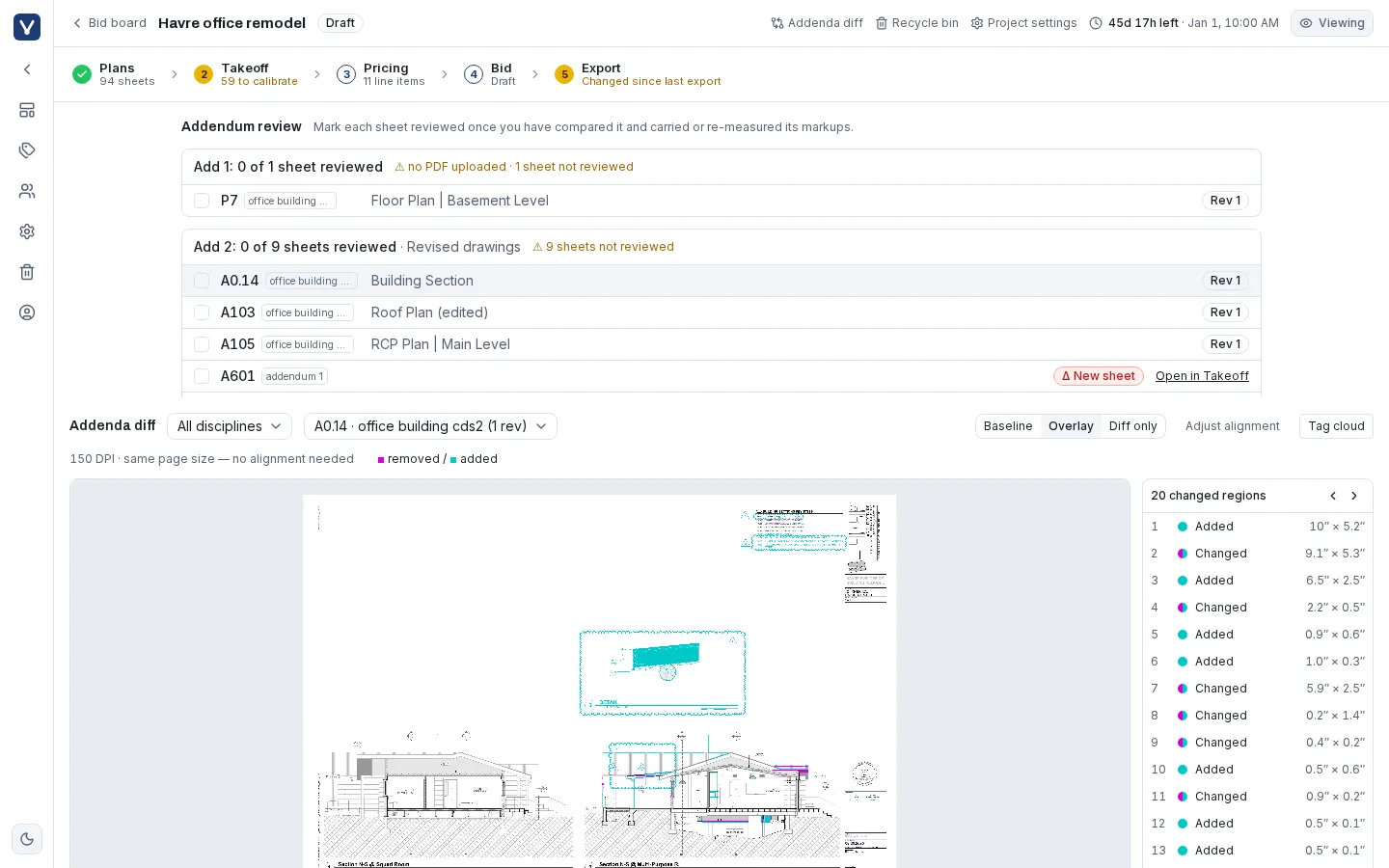
Addenda diffing. Each addendum is overlaid on the sheet it replaces, the changed regions are listed, and each revised sheet gets a checklist so nothing is missed before the bid goes out.
Pricing to proposal. Unit costs, labor, waste, tax and alternates roll up into a bid form PDF, an annotated plan set and schedule of values exports.
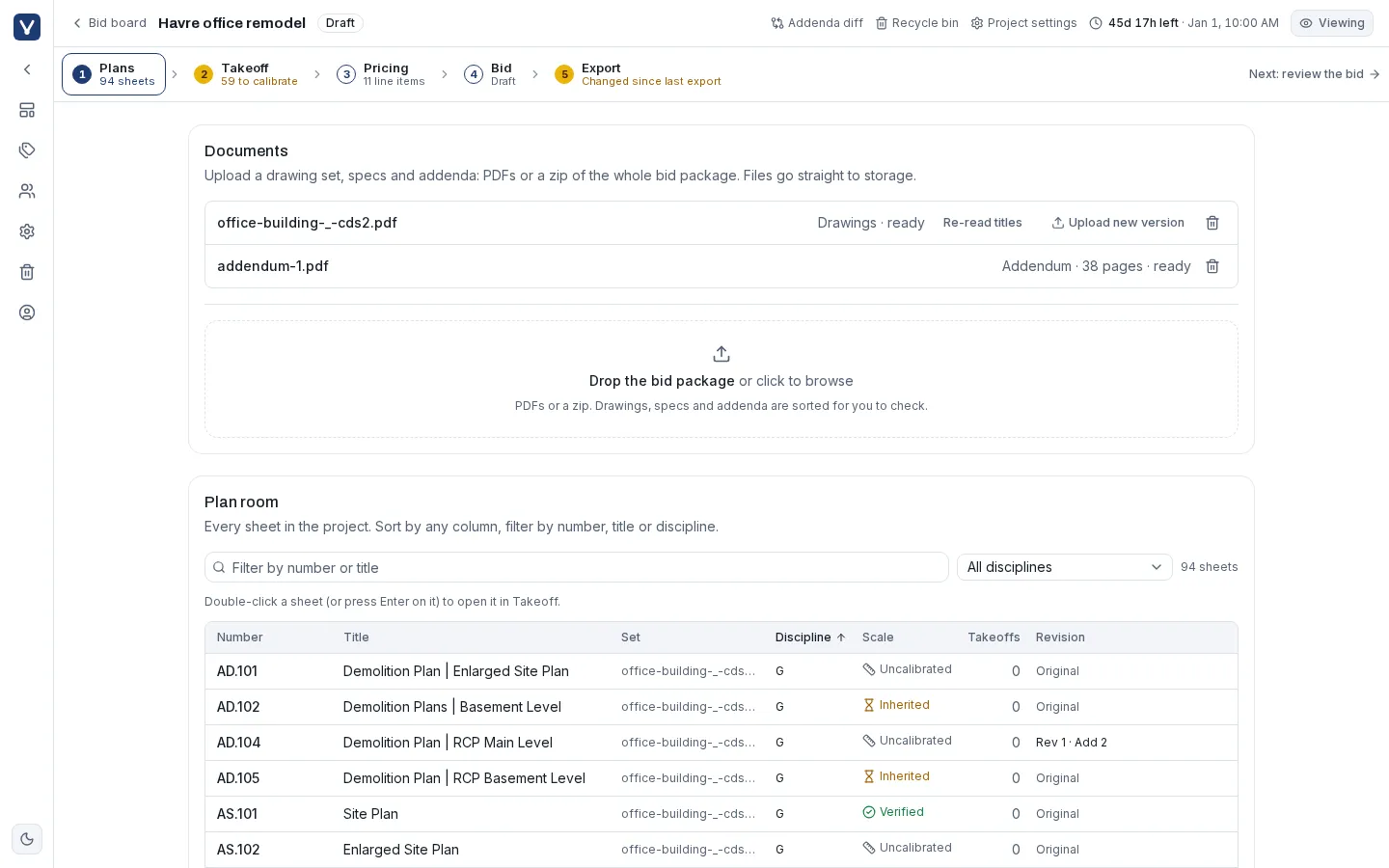
The app is Next.js on Vercel. PDF.js renders the drawings in the browser and Konva draws the takeoff on top, and the drawing files go straight from the browser to storage. Supabase holds the rest: Postgres with row-level security per company, auth and storage. Each project moves through the same steps, plans, takeoff, pricing, bid and export, and Playwright tests the main flows end to end.
4 decisions
Postgres, auth and storage come in one service, so I can ship alone without running infrastructure. Row-level security keeps each company's data to that company at the database level, so no query depends on remembering a filter.
Drawing sets are large. PDF.js renders the sheets in the browser and Konva draws the takeoff on top, so the heavy PDF work stays on the estimator's machine. The files themselves go straight from the browser to storage.
Two people can't edit the same bid at once, so each edit takes a lock, and the database is the authority on who holds it. A browser test in CI once exposed a race where a late lock check could drop a lock that had just been taken. The fix makes a stale check unable to override a newer lock, and a wrong lock still fails safely on save.
Playwright runs the main flows in a real browser on every change, from sign-in through takeoff and pricing. That suite is what caught the lock race, which AI review had passed.
Feature level
From the project record
Result
Vectadiff is live at vectadiff.com, in early access. An estimator can take a project from the drawings and specs through takeoff, pricing and addenda review to an exported bid form PDF and schedule of values.
Looking back
I would start with a narrower first wedge. Takeoff, spec parsing, addenda and pricing are four hard problems, and I took on all four for the first version. If I started again I would begin with takeoff and pricing only, quantities from the drawings through to a priced bid, and add spec parsing and addenda once that part was excellent.