Outcome
Own Your Finances is live at ownyourfinances.com, with iOS and Android apps where people budget, save into pockets that fill from round-ups, track goals and spend with a virtual debit card.
A fintech app for budgeting, savings pockets with round-ups, goal tracking and virtual debit cards, with bank linking and identity checks.
0→1
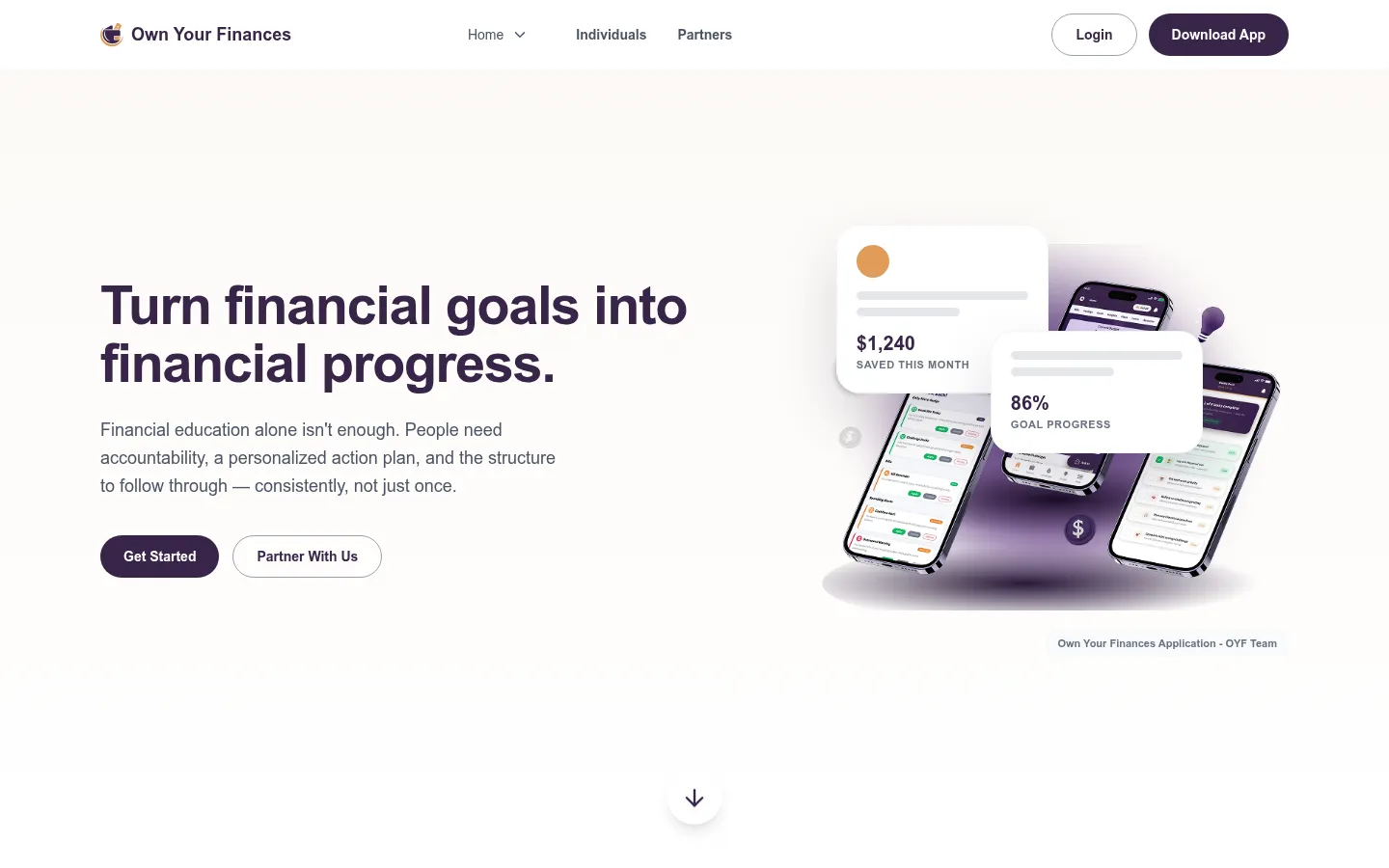
Own Your Finances is a personal finance app. People set a budget, save into virtual pockets that fill from round-ups on their spending, track goals and spend with a virtual debit card. Linking a bank account and passing identity checks happen inside the app.
The mobile apps. The iOS and Android apps in Angular and Ionic, the main way people use the product.
Banking integrations. Bank linking through Plaid, virtual debit cards from Bond’s banking-as-a-service platform, and the KYC and AML flow that checks a user’s identity.
Savings pockets. Virtual pockets with round-ups, and goal tracking on top of them.
The iOS and Android apps and a React marketing website sit in front of a WordPress backend with custom REST APIs, which holds the business logic, user management and financial data. The backend connects to Plaid for bank linking, to Bond for virtual debit cards and to the identity checks. The apps call that API for every budget, pocket and goal.
3 decisions
The hardest constraint was the existing WordPress backend. Its custom REST API held the business logic, user management and financial data, and the apps, the banking integrations and the savings features were all built on top of it.
The apps are written once in Angular with Ionic and Capacitor and ship to both iOS and Android. Both platforms get every feature from the same code.
Bank linking comes from Plaid, and virtual debit cards come from Bond's banking-as-a-service platform. The app connects the providers to the user's budget and pockets. Identity checks run through a KYC and AML flow.
Feature level
From the project record
Result
Own Your Finances is live at ownyourfinances.com, with iOS and Android apps where people budget, save into pockets that fill from round-ups, track goals and spend with a virtual debit card.
Looking back
I would move off WordPress to a dedicated backend sooner. A financial app depends on its backend for user data, money movement and the provider integrations, and WordPress was the constraint every feature had to work around. A purpose-built API from the start would have given the apps a cleaner base to grow on.